Where we work
Wiltshire and Gloucestershire.
We fit and service air conditioning across both counties and the Cotswolds. What you can fit depends on where you are: which council decides, what your building is made of, and how hot it really gets. So here’s each town, with the things we’d want to know about it.
- 20
- places with a page of their own
- 8
- councils that decide
- 2
- National Landscapes
- 10
- Met Office stations
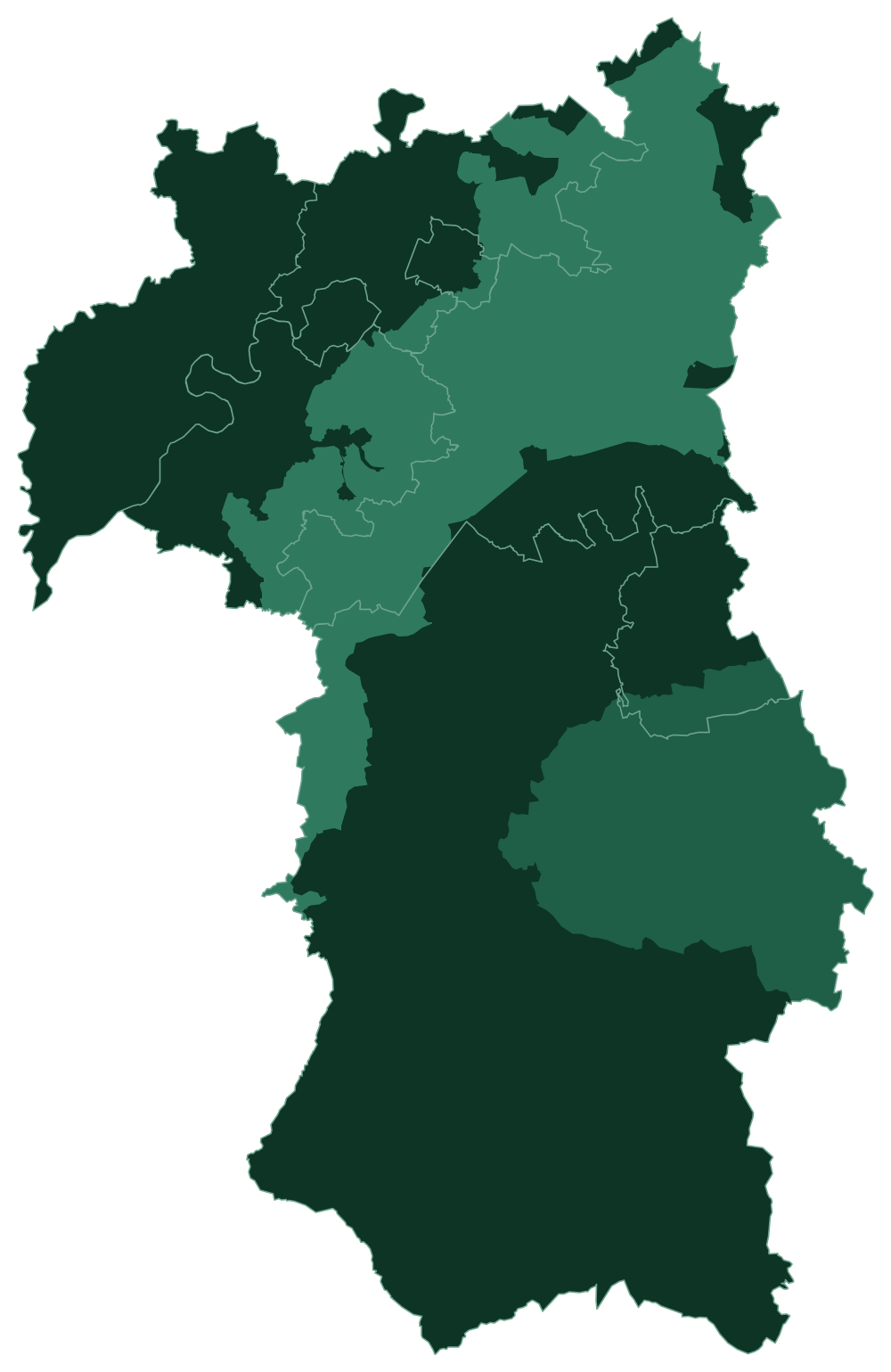 WiltshireForest of DeanTewkesburyCotswoldsNorth Wessex Downs1Tewkesbury2Cheltenham3Gloucester4Stroud5Cirencester6Fairford7Nailsworth8Tetbury9Wotton10Malmesbury11Swindon12Wootton Bassett13Chippenham14Calne15Corsham16Marlborough17Bradford on Avon
- 1TewkesburyTimber frames behind brick fronts, the Abbey, and two rivers that meet.
- 2CheltenhamRegency terraces, 2,602 listed buildings, and the 1990 UK heat record.
- 3GloucesterTimber frames behind brick fronts, the Docks, and last summer’s hottest day nearby.
- 4StroudShops with flats above, a brick quarter, and mills along the valleys.
- 5CirencesterFour conservation areas, and timber frames hiding behind the render.
- 6FairfordPale stone by the Coln, and a church with its medieval glass complete.
- 7NailsworthThree conservation areas meet in a valley, in a gap in the National Landscape.
- 8TetburyA wool town of shops and hotels in the old streets, and detached houses around them.
- 9Wotton-under-EdgeRender over timber frames, soft clay rag stone, and a street plan from 1253.
- 10MalmesburyAn abbey town on a hilltop, with 321 list entries around the Cross.
- 11SwindonThe Railway Village, Old Town, and a great many newer homes.
- 12Royal Wootton BassettA brick High Street, and a Town Hall on fifteen stone columns.
- 13ChippenhamBath stone under the paint, and business parks on the edge of town.
- 14CalneCoral Rag and Bath stone by the Marden, where the bacon factory stood.
- 15CorshamThe town that sits on the stone, with a High Street to match.
- 16MarlboroughA wide High Street, cob behind the render, and the frostiest of the stations near us.
- 17Bradford on AvonA Saxon church, a bridge with a lock-up on it, and terraces you reach on foot.
- The CotswoldsA landscape, not a council: what the designation does, and what it doesn’t.
- The Forest of DeanA ring of sandstone towns round the Crown forest, and summer 2026’s hottest day.
- The North Wessex DownsChalk, flint, sarsen and thatch, and the most air frosts of our stations.
Four things
What changes from place to place.
The unit is the same anywhere. What it’s allowed to be, where it can go and how hard it works are not.
Who decides
Your local council, not a national body. In a National Landscape, the landscape’s own board may comment, but the council decides.
The eight councilsThe building
Bath stone, Cotswold rubble, ashlar over brick, cob, timber frames behind render, railway terraces and new estates. Each changes where a pipe can go, and a listed one changes everything.
Older and listed housesHouse or business
The national planning right covers houses and flats. There’s no equivalent for shops and offices, except where a council has made its own rule, as Swindon has.
Offices and garden roomsThe weather
July averages differ by nearly two degrees across the ten stations near our towns, and air frost days by about twenty-two. That changes how hard a unit works, and which job it does most.
The ten stations
Listed buildings
Town by town, on the List.
A listed building needs consent inside and out, so this is the number that most changes a job. Each bar is our count of entries on the National Heritage List in a 2 km square around the town’s centre.
- Cheltenham779among 8,828 buildings
- Gloucester369among 5,753 buildings
- Tewkesbury359among 1,868 buildings
- Cirencester323among 3,585 buildings
- Malmesbury321among 1,276 buildings
- Bradford on Avon321among 1,662 buildings
- Marlborough273among 2,917 buildings
- Corsham246among 2,301 buildings
- Stroud245among 2,111 buildings
- Chippenham244among 2,984 buildings
- Tetbury232among 3,058 buildings
- Wotton-under-Edge193among 2,673 buildings
- Calne163among 3,609 buildings
- Nailsworth119among 1,302 buildings
- Fairford119among 1,094 buildings
- Swindon115among 10,319 buildings
- Royal Wootton Bassett52among 3,996 buildings
The walls
What the buildings are made of.
Where the pipes can go, and what the units can be fixed to, depends on the wall. These are the ones our towns are built of, from their listings and conservation area appraisals, each about a metre across.
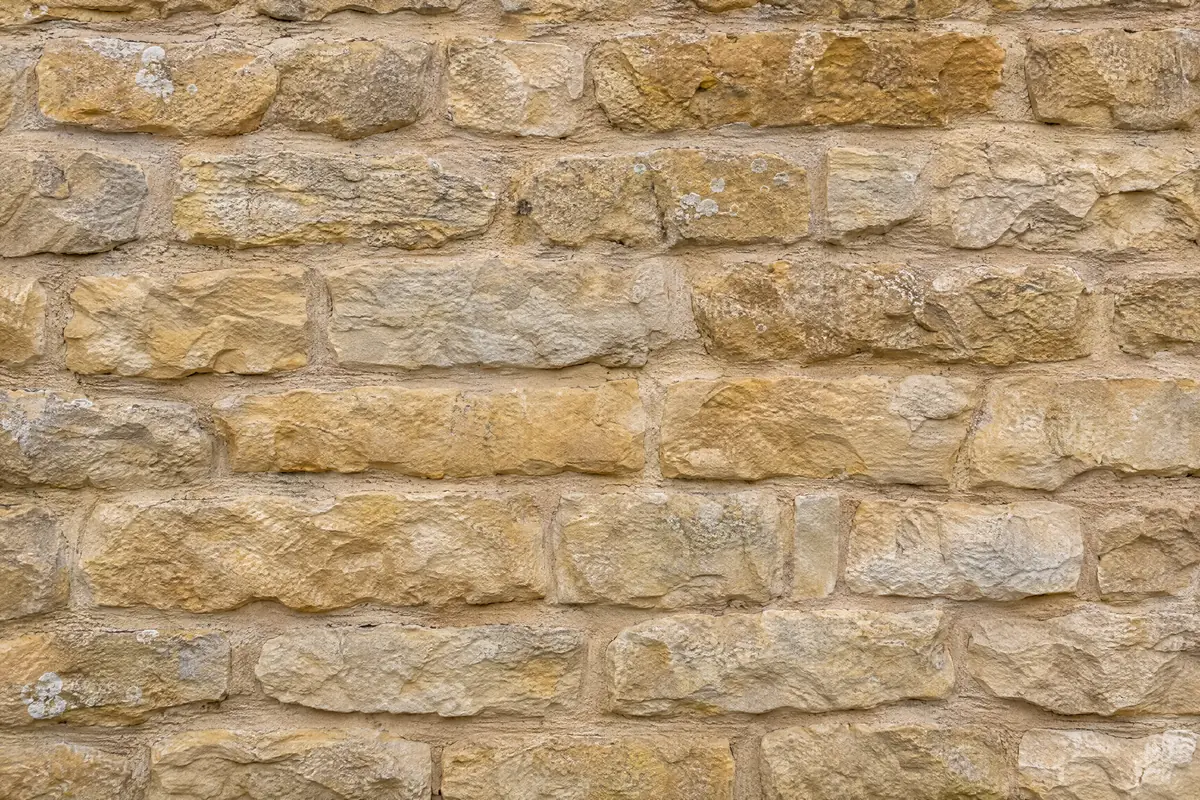
Cotswold limestone
Malmesbury, Cirencester, Tetbury, Stroud, Corsham, Nailsworth, Fairford
Coursed rubble or smooth ashlar, under stone slate, Welsh slate or clay tile, often lime-washed or rendered in the south of the district. In a wall like this the hole goes along a joint where it can, made good in lime.
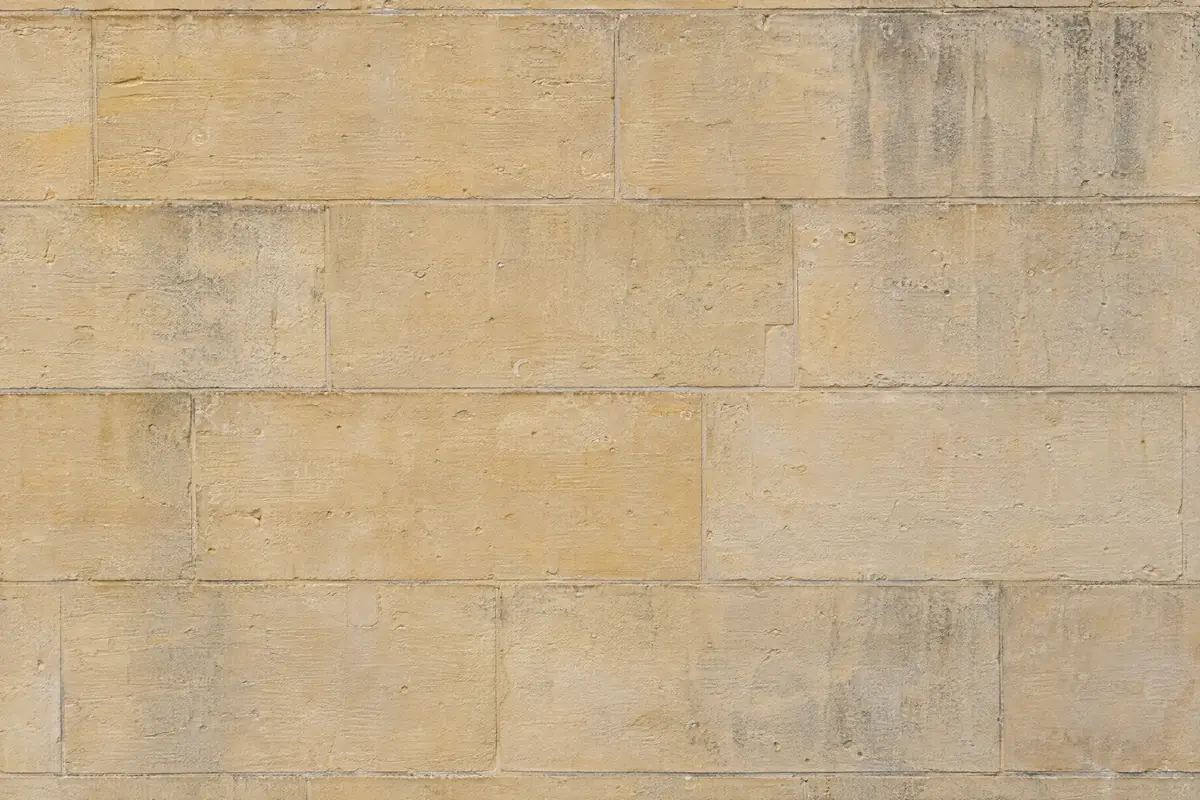
Bath stone
Ashlar faces and sawn chimneys, often hidden under render or paint in Chippenham. Corsham sits on the seam, and it’s still quarried there. A smooth dressed face shows every mark, so we look at the side and back walls first.
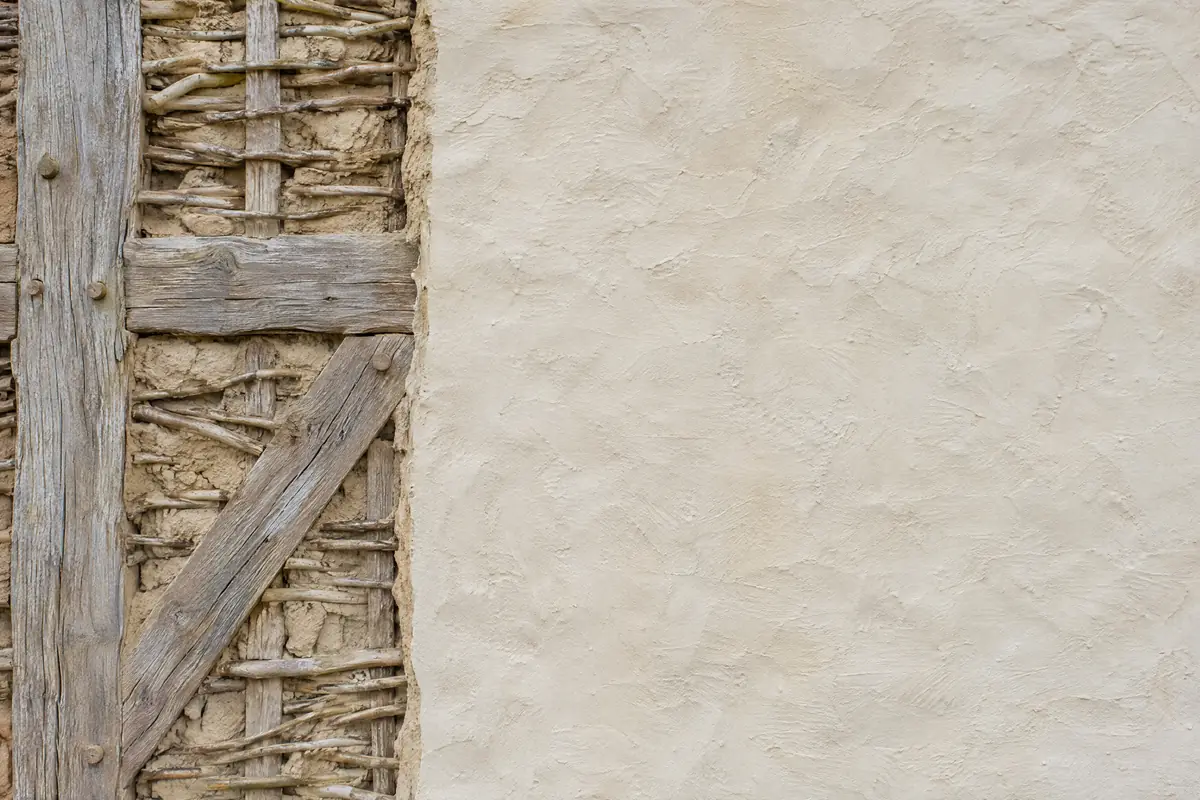
Timber frames
Tewkesbury, Wotton-under-Edge, Cirencester, Chippenham, Gloucester
Frames from the 15th to the 17th century, many hidden behind render or a brick front. Tewkesbury is built of them, because its mudstone gave no building stone, and in Wotton render over a frame is the local tradition. We find the frame before anything is drilled.
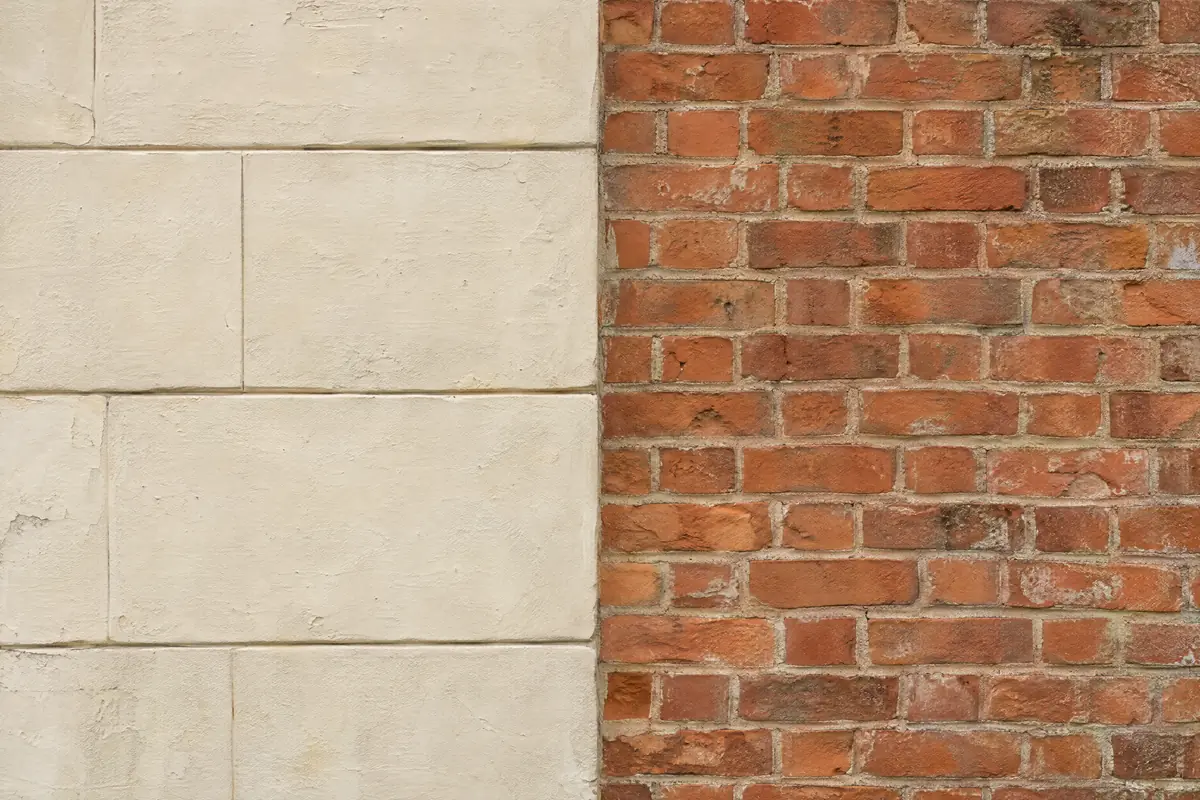
Ashlar over brick
Regency terraces faced in ashlar over brick rather than solid stone, under slate, with iron verandahs and railings. The face is a skin, and the brick behind it carries the fixings.
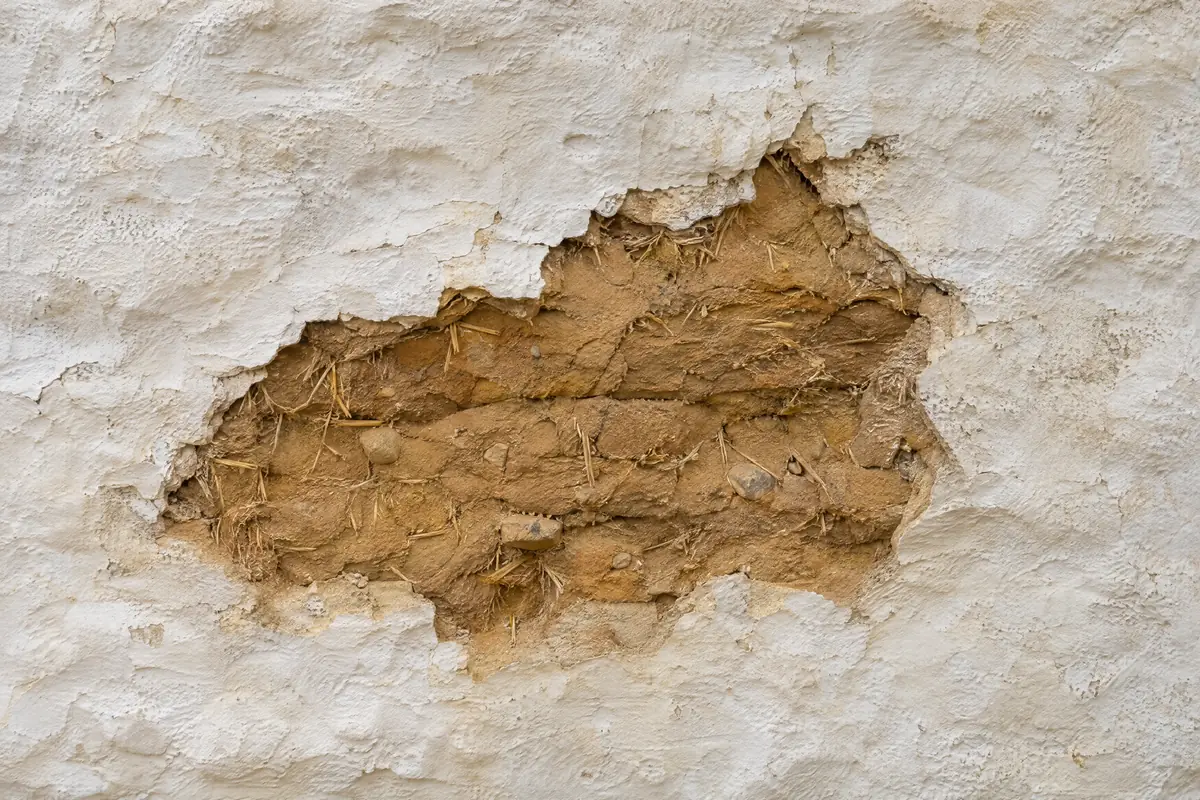
Cob
Marlborough, The North Wessex Downs
Part of Marlborough’s High Street is rendered cob under Welsh slate, and chalk cob is one of the Downs’ own walls: earth behind the render. Holes and fixings in it need care.
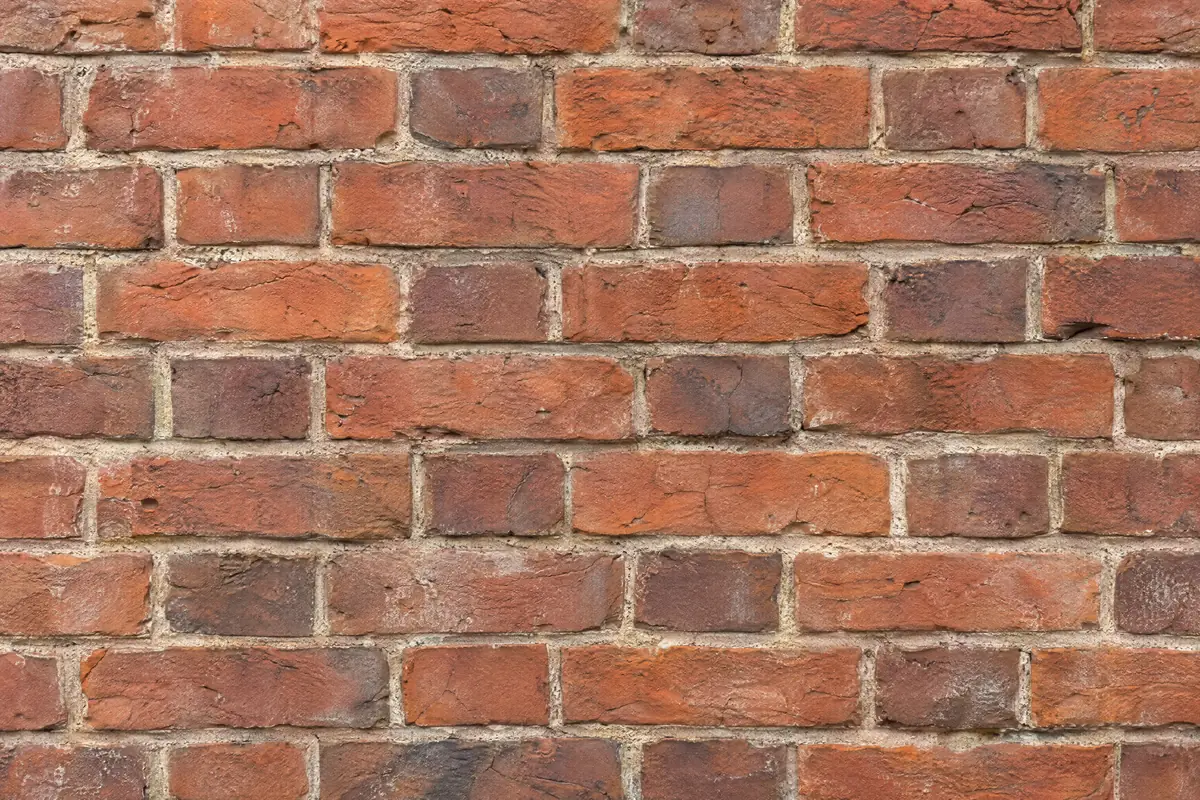
Brick
Royal Wootton Bassett, Tewkesbury, Stroud, Gloucester
Royal Wootton Bassett’s High Street, often in patterned brick; Tewkesbury’s red-brick fronts; Stroud’s Brick Quarter and its mills; and the warehouses of Gloucester Docks. In a terrace, the back is usually the place for the outdoor unit.


Who decides
| Council | Towns here | Conservation and planning |
|---|---|---|
| Wiltshire Council | Malmesbury, Chippenham, Corsham, Marlborough, Royal Wootton Bassett, Calne, Bradford on Avon | The council’s pages |
| Swindon Borough Council | Swindon | The council’s pages |
| Cotswold District Council | Cirencester, Tetbury, Fairford | The council’s pages |
| Stroud District Council | Stroud, Nailsworth, Wotton-under-Edge | The council’s pages |
| Cheltenham Borough Council | Cheltenham | The council’s pages |
| Gloucester City Council | Gloucester | The council’s pages |
| Tewkesbury Borough Council | Tewkesbury | The council’s pages |
| Forest of Dean District Council | The Forest of Dean | The council’s pages |
What’s changing in Gloucestershire
- 16 July 2026Government announces a single council for Gloucestershire from April 2028.
- 7 September 2026The programme is paused for review after new legal advice.
- 29 October 2026That decision is withdrawn. Ministers are now minded to create one council, called Gloucestershire, for all six districts, with elections in May 2028 and a start in April 2029. It isn’t final.
- Until thenCotswold, Stroud, Cheltenham, Gloucester, Tewkesbury and the Forest of Dean stay the planning authorities. Wiltshire and Swindon, already single councils, aren’t affected.
How hot, how cold
- 38.2°
- at Hartpury, near Gloucester, on 13 August 2026, the UK’s highest of that summer
- 37.1°
- at Cheltenham on 3 August 1990, the UK record until 2003
- 55
- air frost days a year at Marlborough, the most of these ten stations
- Summer 2026
- Provisionally the UK’s warmest on record, and the first year on the record with 35° or more in May, June and July.
- August 2026
- Gloucestershire’s average maximum was 4.3° above normal, the joint largest in the UK. Wiltshire’s was 4.2° above.
| Met Office station | Average July high | Average January low | Air frost days a year | Hours of sun a year |
|---|---|---|---|---|
| Cheltenham | 23.2° | 2.3° | 36 | 1,543 |
| Cirencester | 22.3° | 1.2° | 48 | 1,524 |
| Marlborough | 21.8° | 1.5° | 55 | 1,563 |
| Lyneham | 21.5° | 1.7° | 40 | 1,653 |
| Little Rissington | 21.4° | 1.1° | 46 | 1,632 |
| Pershore | 22.6° | 1.7° | 50 | 1,583 |
| Brize Norton | 22.5° | 1.7° | 44 | 1,652 |
| Ross-on-Wye | 22.3° | 2.2° | 39 | 1,578 |
| Bath | 21.8° | 2.2° | 32 | 1,582 |
| Filton | 21.7° | 2.4° | 33 | 1,658 |
Working from home
More people here work from home.
On census day in 2021, five of our eight council areas had more people working mainly at or from home than England as a whole. If that’s you, the room you work in all day is the one to think about first.
- Cotswold39.1%
- Cheltenham36.7%
- Stroud35.0%
- Wiltshire34.1%
- Tewkesbury33.4%
- England31.5%
- Swindon30.6%
- Forest of Dean28.1%
- Gloucester24.2%
Questions
Asked across Wiltshire and Gloucestershire
Do I need planning permission for air conditioning in Wiltshire or Gloucestershire?
Often not on a house. The national right for heat pumps applies here as anywhere in England, if the unit heats as well as cools, is within the size and number limits, and passes the 37 dB noise test at the neighbour’s window. Listed buildings, conservation areas and business premises are different, and a council can remove the right with an Article 4 direction. None of the Article 4 directions we found in our ten towns names heat pumps or air conditioning. More on this
Do the National Landscapes stop me fitting air conditioning?
Not by themselves. The national rules name conservation areas and World Heritage Sites, not National Landscapes, so being in the Cotswolds, the North Wessex Downs or the Wye Valley doesn’t take the right away. Your local council decides, and the National Landscape’s board or partnership only comments. A conservation area or a listed building changes things. More on this
Which council decides in my town?
In Malmesbury, Chippenham, Corsham, Marlborough, Royal Wootton Bassett, Calne and Bradford on Avon, Wiltshire Council. In Swindon, Swindon Borough Council. In Cirencester, Tetbury and Fairford, Cotswold District Council. In Stroud, Nailsworth and Wotton-under-Edge, Stroud District Council. In Cheltenham, Cheltenham Borough Council; in Gloucester, Gloucester City Council; in Tewkesbury, Tewkesbury Borough Council; and in the Forest of Dean, Forest of Dean District Council.
Is Gloucestershire getting a single council?
Probably, but it isn’t decided. On 29 October 2026 ministers said they were minded to replace all six of Gloucestershire’s councils with one, from April 2029, with elections in May 2028. Until then the district, borough and city councils stay the planning authorities. Wiltshire and Swindon are already single councils.
How hot does it get here?
The UK’s highest temperature of summer 2026, provisionally the warmest on record, was 38.2° at Hartpury, near Gloucester, on 13 August. Cheltenham held the UK record with 37.1° on 3 August 1990, until 2003. In the Met Office’s 1991 to 2020 averages, Cheltenham has the warmest July days of the ten stations near our towns, and Marlborough the most air frosts. More on this
Do you cover villages that don’t have a page?
Yes, anywhere in the two counties. We only write a page about a place when there’s something true and particular to say about it, but we’ll come to you wherever you are.
Not on the list?
We only write about a place when there’s something true and particular to say about it, so your village won’t have its own page. We’d still like to hear from you, anywhere in the two counties.