Air conditioning in the Cotswolds
Yes. Being in the Cotswolds National Landscape doesn’t by itself remove the national planning right for heat pumps on homes. What changes things is a conservation area or a listed building, and the Cotswolds have plenty of both: 10,631 list entries touch its boundary. Your local council decides, not the National Landscape.
At a glance
- Who decides
- Your local council. For us that means Cotswold, Stroud, Cheltenham or Wiltshire. The Board only comments.
- What it is
- An Area of Outstanding Natural Beauty, still its legal name, designated in 1966: 2,038 square kilometres.
- Air conditioning
- We found no Board guidance on it. Its position on heat pumps is supportive in principle.
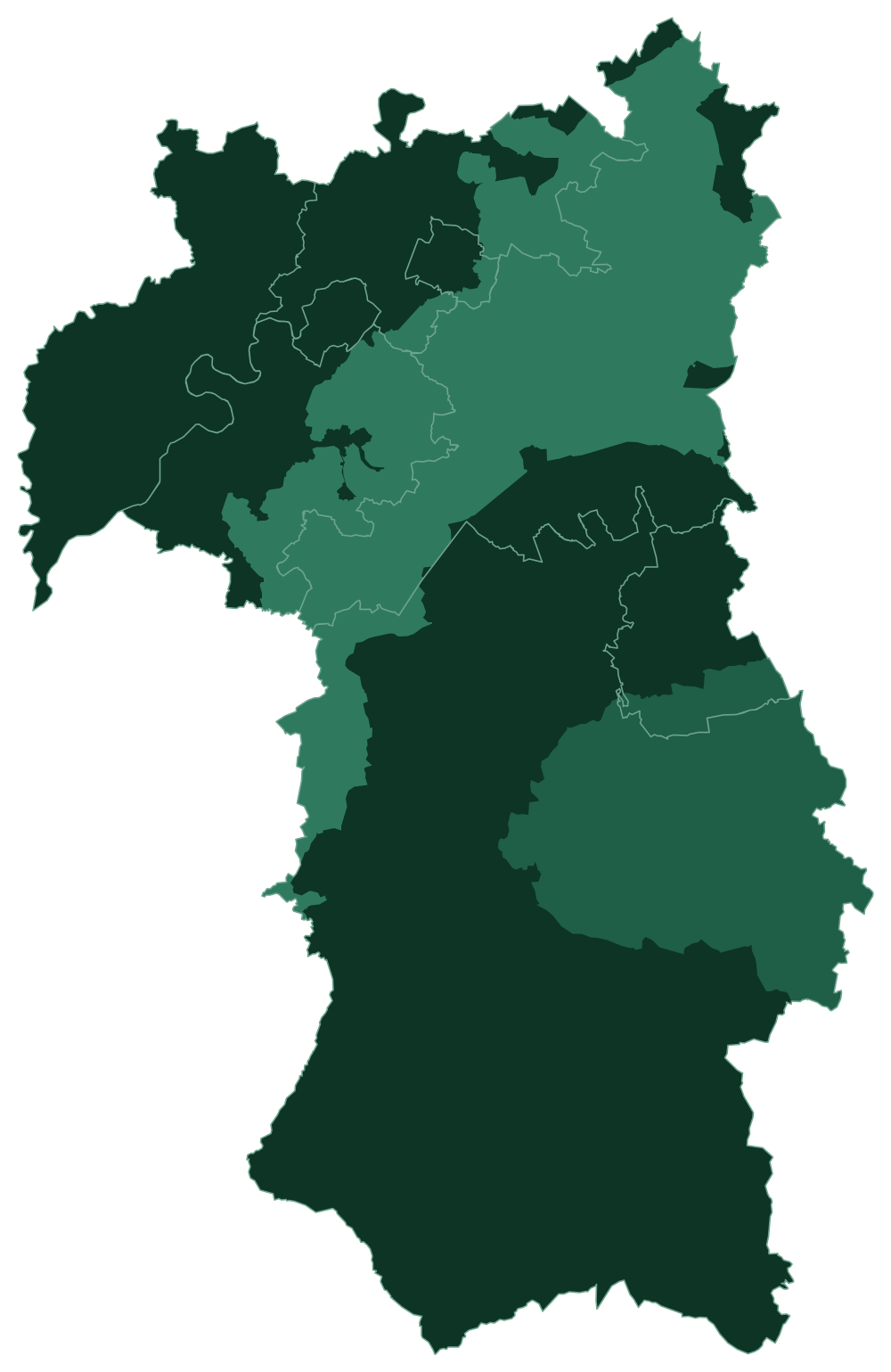 WiltshireForest of DeanTewkesburyCotswoldsNorth Wessex Downs1Tewkesbury2Cheltenham3Gloucester4Stroud5Cirencester6Fairford7Nailsworth8Tetbury9Wotton10Malmesbury11Swindon12Wootton Bassett13Chippenham14Calne15Corsham16Marlborough17Bradford on Avon
10,631
list entries touch its boundary, by our count of the government’s planning data. It covers 2,038 square kilometres and 15 local authority areas, and its highest point is 330 metres, at Cleeve Hill.
Boundaries from planning.data.gov.uk, Open Government Licence. Contains OS data © Crown copyright and database right.
What the designation does
The national right names conservation areas and World Heritage Sites, but not National Landscapes. Cotswold District Council’s own table gives the same air source conditions for homes in the designated area as for ordinary homes. So a house in a hamlet outside any conservation area may have an easier time than one in a town beyond the boundary.
A point check shows how little the line follows what people think of as the Cotswolds. Tetbury’s Market House and Cirencester’s Cecily Hill are inside. Cirencester’s Market Place, Stroud High Street and Cheltenham’s Promenade aren’t.

What its Board says
The Cotswolds National Landscape Board is a small team that responds to planning consultations and offers charged pre-application advice. Its position on renewable energy is supportive of heat pumps in principle, as long as size, location, noise, historic landscapes, archaeology, trees and habitats are properly addressed, and it says domestic proposals will normally be acceptable given their limited landscape impact.
Its 2025 to 2030 Management Plan says traditional and listed buildings should ideally be retrofitted by historic building specialists where the work affects the fabric. We found nothing from the Board specifically about air conditioning, or units used only for cooling.
What the stone means
Cotswold limestone runs from silvery white through grey to golden ochre, and stone slates are split along the bed and laid in courses that shrink from eaves to ridge, which is why the roofs are so steep. The national right doesn’t allow a unit on a pitched roof anyway. It’s the walls that matter: we take a route through a part that’s already been altered, and put the outdoor unit out of sight of the lane if we can.
If it’s listed, consent comes first. And if you want a place to start reading, Cotswold District Council’s retrofit guide is the best local one we found.
In October 2026 ministers said they were minded to replace Gloucestershire’s councils with a single one from April 2029. That isn’t final, and your district council decides until something changes.
Your own building
Check it in three steps.
Almost everything above turns on two questions: is it listed, and is it in a conservation area? Both answers are public. Or leave it to us.
- 1
Is it listed?
Search Historic England’s National Heritage List by name or address. A listing covers the whole building, inside and out.
Search the List - 2
A conservation area, or an Article 4 direction?
The government’s planning data map shows both by postcode. It says its data may not yet be complete, so we check with the council as well.
Conservation areasArticle 4 directionsCotswolds National Landscape boundary
- 3
Or leave it to us
We look both up before we quote, and tell you what they mean for where the unit can go.
See my price
How hot, how cold
The Cotswolds aren’t one climate. Little Rissington, at 210 m on the high ground, and Cheltenham, below the escarpment, are two stations and not a rule, but compare them. Height didn’t stop the heat in 2022.
- 21.4°
- average July high at Little Rissington, 1991 to 2020
- 23.2°
- average July high at Cheltenham
- 35.8°
- at Little Rissington on 19 July 2022
The 2022 figure is from the US government’s NOAA daily summary of the station’s own reports, not a Met Office publication.
Questions
Asked in the Cotswolds
Do I need planning permission for air conditioning in the Cotswolds?
Not just because you’re in the National Landscape. On a house, the national right can apply if the unit also heats and meets the limits. A conservation area adds limits on siting, and a listed building takes the right away.
Who do I apply to?
Your local council, not the National Landscape Board. It covers 15 local authority areas. In Gloucestershire, that may change: ministers are minded to replace the councils with one from April 2029.
Does a cooling-only unit count?
No. The national right requires that the unit isn’t used solely for cooling. The government says planning permission usually isn’t needed for a cooling-only unit on a small home if it doesn’t materially change the outside, but to check with your council.
Sources
Planning and the place
- Cotswolds National Landscape: Management Plan 2025 to 2030
- Cotswolds National Landscape: Renewable Energy position statement, June 2023
- Cotswolds National Landscape: planning advice
- Cotswolds National Landscape: geology
- Planning data: Cotswolds National Landscape boundary
- Cotswold District Council: permitted development table, June 2025
- Cotswold District Council: retrofit and energy efficiency
- Cotswold Design Code, Local Plan 2011 to 2031
- Part 14, Class G, General Permitted Development Order 2015
- Government letter to Gloucestershire council leaders, 29 October 2026
Last checked 5 November 2026. This is a plain summary for people planning a job, not legal advice. Rules can apply differently to a specific address.